
What Does a Construction Site Actually Need?
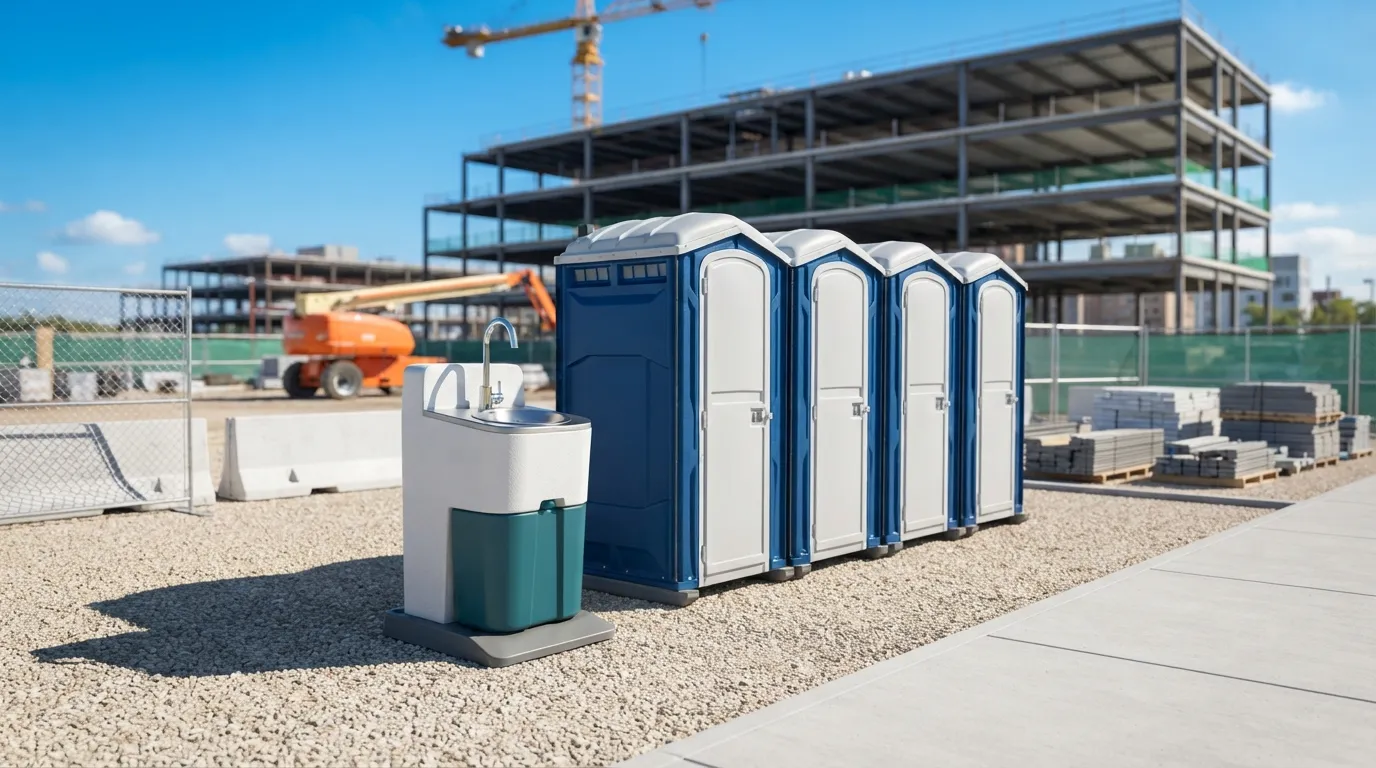
Start with the toilets, because OSHA 1926.51(c) is specific: one toilet seat for 20 workers or fewer, then one seat and one urinal per 40 workers once you pass that line, scaling again at 200 workers. That is the floor, not a suggestion, and inspectors do check. Beyond the toilet, most Tacoma jobsites need a roll-off dumpster for debris, since OSHA 1926.25 requires scrap and waste cleared from work areas, and 1926.252 covers how you dispose of it if you are running chutes or enclosures. Add temporary fencing if the site sits near a sidewalk or a school, and a handwashing station if crews are mixing anything wet-trade. Pair that with soap and towels under 29 CFR 1910.141(d)2, since hand sanitizer alone does not satisfy that rule. If the crew is applying paints, coatings, herbicides or insecticides, OSHA 1926.51(f)(1) kicks in separately and requires washing facilities for that specific exposure. Bigger sites sometimes add a mobile office trailer or a storage container for tools, and a light tower or temporary power pole if the schedule runs into shorter daylight. Not sure how many units your crew needs? Our porta potty calculator guide walks through the math by headcount, and our OSHA portable toilet requirements guide covers osha portable toilet requirements construction crews ask about most.
How Many Portable Toilets Does OSHA Require?
The ratio is fixed at 1926.51(c): one unit per 20 workers up to 20 people, then one toilet seat and one urinal per 40 workers as the crew grows, dropping to one per 50 at 200 or more workers. That table does not bend for job type, so a framing crew in Fife and a road crew in Tacoma follow the same math. Cal OSHA runs a parallel standard on the same logic, which is why cal osha portable toilet requirements construction crews follow read close to the federal table, and Texas construction sites answer to federal OSHA 1926.51(c) directly since there is no state plan overriding it there, so a contractor comparing construction portable toilet rental near texas options against construction portable toilet rental near california options is working from the same baseline number either way. For a 15 person Tacoma remodel crew, that is one standard porta potty at $100 to $150 a day. A 50 person crew needs two to three units depending on urinal mix, and by 200 workers you are managing a fleet, which is where a monthly porta potty rental at $125 to $325 makes more sense than daily billing. ANSI/PSAI Z4.3 sets the service baseline at once weekly for up to 10 users over a 40 hour week, so a busy site may need twice-weekly service, not because the toilet count changed but because usage did.
What Does Portable Toilet Rental for Construction Sites Cost?
Pricing runs by unit and by duration, and longer terms cost more in total but less per day. A single standard porta potty rental for a week job in Tacoma costs less per day than the same unit rented for one day, because the day rate carries more overhead per unit. Delivery adds a separate line.
| item | day | week | month |
|---|---|---|---|
| standard toilet | $100 - $350 | $130 - $500 | $125 - $325 |
| dumpster | $51 - $112 | $426 - $778 | $500 |
| fence panel | $30 - $75 | - | - |
| delivery fee | $100 - $500 | $100 - $150 | $120 - $420 |
A weekend-only pour or inspection window runs its own rate, closer to $125 to $400 for a standard unit over the weekend, separate from the weekly figure above. If a worksite needs an ADA-compliant unit under ADA Standards 213.2, which requires at least one accessible unit in any cluster, that runs $200 to $400 a day or $120 to $240 a week. Full construction site services cost breakdowns, including per-day pricing, are worth checking before you lock a bid.
Where Should Units Go on an Active Jobsite?
Placement decides how well the whole plan works, not just how the invoice looks. ADA Standards 403.5.1 calls for a 36 inch clear route to any accessible unit, and 405.2 caps ramp slope at 1:12 if the ground is not flat, which matters on a graded Tacoma lot. Keep units away from active excavation and away from the swing radius of equipment, and give your roll-off dumpster about 60 feet of straight clearance behind the truck for delivery, since roll-off trucks cannot maneuver tight corners the way a service van can. OSHA 1926.202 requires barricades around hazards to meet ANSI D6.1, so if a unit sits near a trench or a stockpile, fence it the same way you would fence the hazard itself. Lighting matters too. OSHA 1926.56(a) sets minimum illumination for work areas, and a unit tucked in a dark corner at 5pm in November is a liability even if the toilet count is technically correct. If your Tacoma site is within city limits, confirm placement in any public right of way with the City of Tacoma before delivery, since that rule is not the same everywhere and needs direct confirmation. For sites outside city limits, check the service area list or see coverage for Puyallup, 11.6 miles southeast, and Lakewood, 9.3 miles southwest.
What size dumpster does a construction site need?
Depends on the job. A remodel usually runs a 10 or 20 yard box, while a full teardown needs 30 or 40 yard capacity. Check dumpster sizes and dimensions and confirm what cannot go in a dumpster before loading, since disposal rules differ by material.
Do I need a permit for a portable toilet on a construction site?
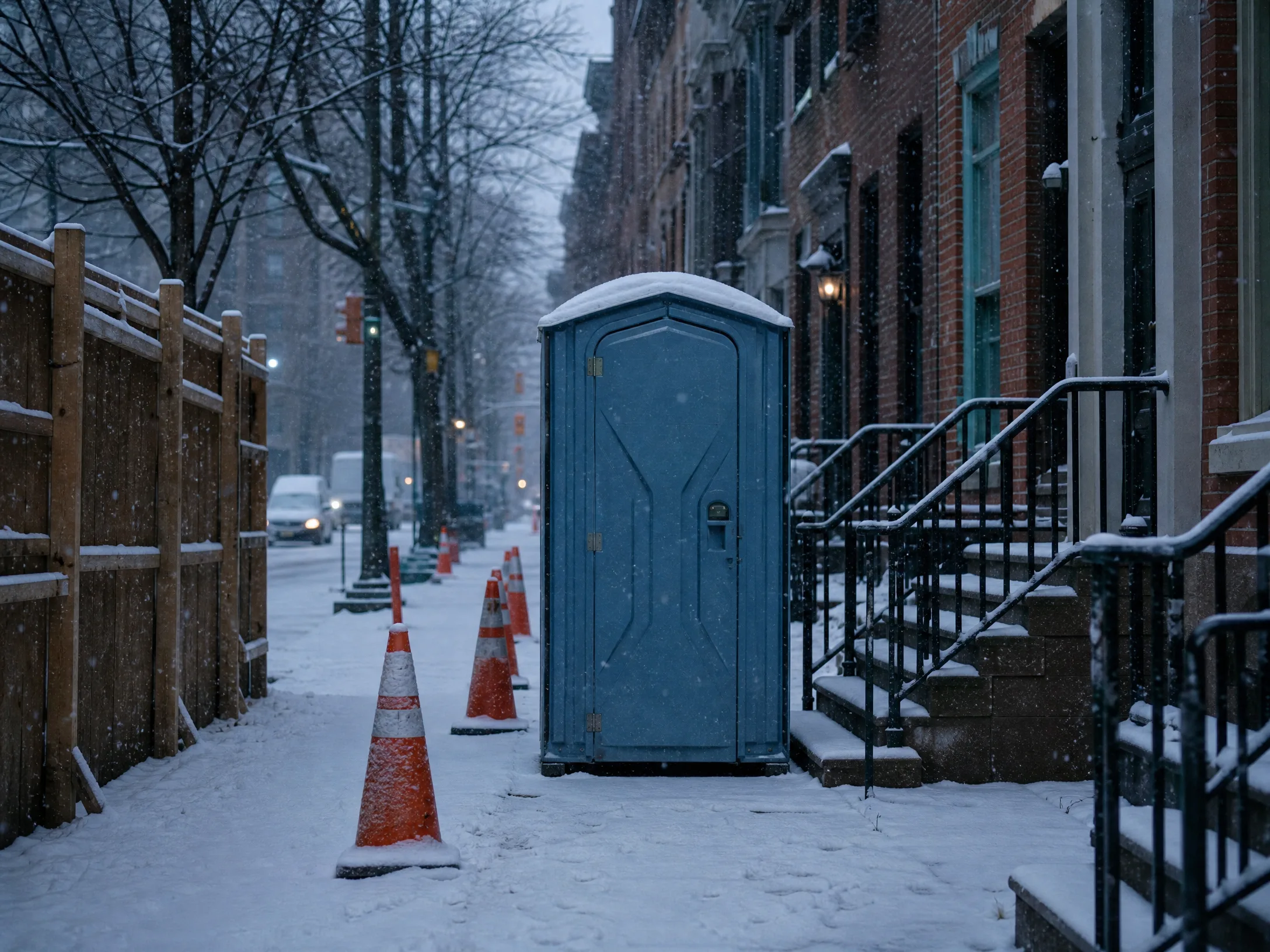
Sometimes, depending on where the unit sits. If it is fully on private property, usually not. If it touches a sidewalk or right of way, the City of Tacoma needs to confirm that directly. See porta potty permit requirements for the full breakdown.
How often are construction porta potties serviced?
ANSI/PSAI Z4.3 sets a baseline of once a week for up to 10 users over a 40 hour week. Busier sites need twice-weekly visits. See how often porta potties are cleaned for what a service call includes.
Can I rent just for a weekend inspection or pour?
Yes. Weekend rates apply outside the standard day or week terms, typically $125 to $400 for a standard unit. Short jobs like a Saturday pour do not need a full week contract.
What is the difference between a standard unit and an ADA unit on site?
An ADA unit meets ADA Standards 213.2 and 304.3.1, including a 60 inch turning circle inside. OSHA 1926.51(c) does not require ADA units by headcount alone, but any public-facing or mixed-crew site should carry at least one.
Next step
Get a delivery date
Tell us the address, the dates and the headcount. We size the order and confirm the route.