
What Kind of Portable Toilet Works on a Farm?
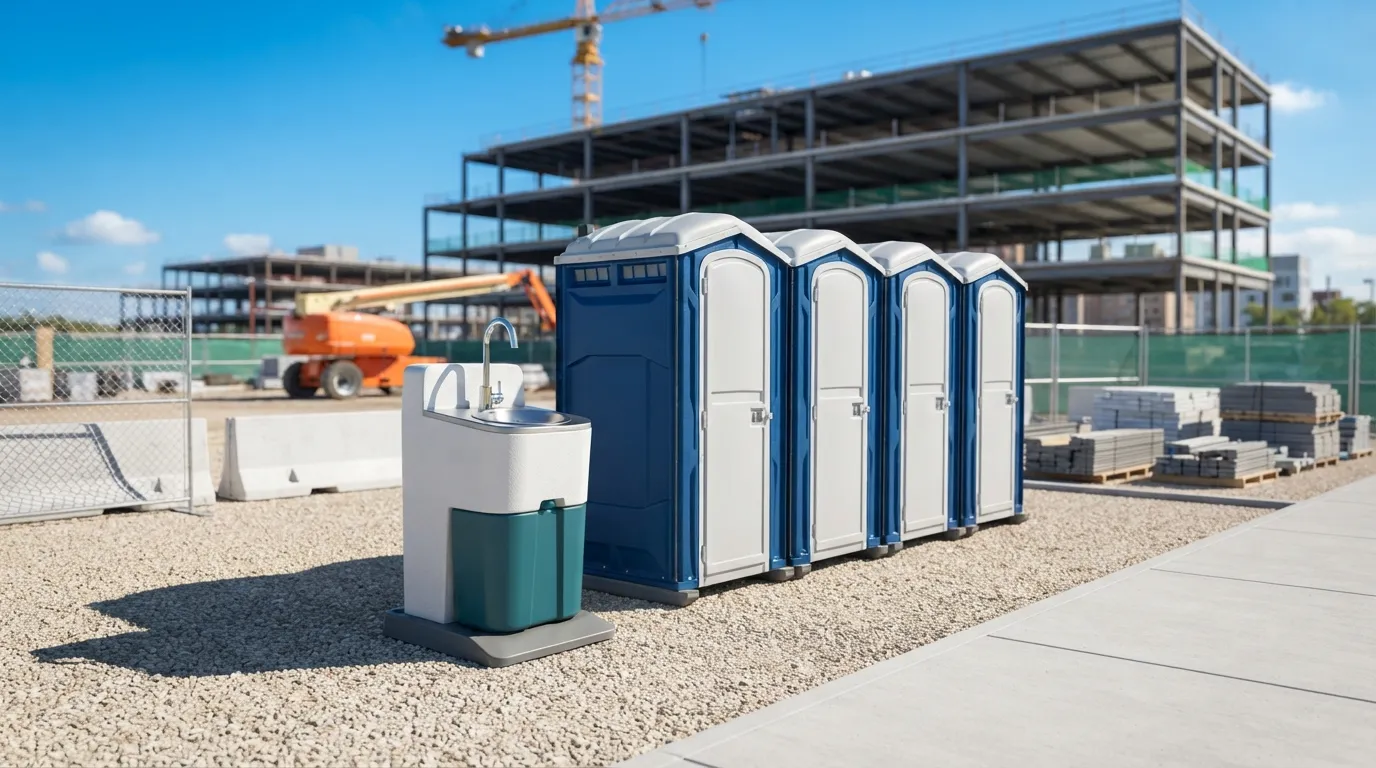
A standard unit is the workhorse here. It measures about 44 by 48 inches on the ground and stands roughly 92 inches tall, small enough to tuck against a fence line or drop at the end of a row without blocking equipment. Tacoma Porta Pros sets these up for hand-labor crews, packing sheds and seasonal harvest operations across Tacoma. If your operation is closer to a farmers market stall or a u-pick weekend than a full labor crew, the standard porta potty rental page covers the base unit, and porta john rental is the same unit under a different name if that is what your foreman asks for.
OSHA 1928.110 covers field sanitation specifically: potable water, toilets and handwashing for employees doing hand labor, with the toilet no more than a quarter mile from the work area. That is a tighter placement rule than most construction sites face, because farmworkers cannot leave the field for a break the way a crew on a fixed job site might. Water access matters just as much here. OSHA 1926.51(a)(1) requires an adequate supply of potable water at any place of employment, which is why a lot of farm operations pair a toilet order with a handwashing station rental or a portable sink rental rather than relying on a single spigot at the barn. For a fast answer on how many units a given crew size needs, run the numbers on how many porta potties do I need.
How Many Restrooms Does an Agricultural Operation Need?
Count your peak hand-labor headcount, then divide by 20 and use OSHA 1928.110's quarter-mile rule to decide placement, not just quantity. A 15-person harvest crew scattered across two fields might need two units instead of one, simply because the quarter-mile walk resets per work area. Compare that to OSHA 1926.51(c), the construction standard, which allows 1 toilet for up to 20 workers before scaling up by crew size. Farms and construction sites get compared a lot, but the walking-distance requirement is what actually drives unit count in agricultural work, not a flat ratio.
Seasonal swings complicate this. A dairy or row-crop operation might run five employees most of the year and forty during harvest. Renting month to month during the slow season, then adding units for a six-week push, keeps you compliant without paying for capacity you do not use. The monthly porta potty rental page walks through that structure, and porta potty rental per day covers short bursts like a single harvest weekend. If your farm sells direct to the public through a stand or seasonal market, treat that traffic separately. Customers are not covered by 1928.110, and a cleaner deluxe unit near a retail stand reads better than a field unit; see deluxe flushable porta potty for that option.
Handwashing deserves its own line item. 29 CFR 1910.141(d)(2) requires soap and towels or a hand-drying device at washing facilities; hand sanitizer alone does not satisfy it. If your crew handles pesticides, herbicides or treated seed, OSHA 1926.51(f)(1) requires washing facilities for that specific contaminant exposure, separate from general field sanitation. A hand sanitizer station rental is a fine supplement near a barn door, but it is not a substitute for soap and water when herbicide application is part of the job.
Where Should Restrooms Go on a Working Farm?
Put restrooms where the quarter-mile rule and truck access overlap, then plan for mud season before you plan for looks. A roll-off delivery for barn cleanout or seasonal debris needs about 60 feet of straight clearance behind the truck, so keep that path clear before harvest traffic fills it with trailers and pallet jacks. The porta potty placement guide covers ground stability and access in more depth, and porta potty in winter is worth reading if your operation runs through Tacoma's wet months, since standing water around a unit base creates its own problems.
Larger operations sometimes need more than toilets. Farms running a processing shed or seasonal storage building often add a storage container rental or a 20ft storage container for equipment and packaging materials during harvest. If you are hosting agritourism events, a pumpkin patch or a fall festival on the property, look at event restroom rental or festival restroom rental instead of the field sanitation setup, since public foot traffic changes the unit mix and cleaning schedule.
Septic infrastructure on the property matters too. A residential-scale septic tank is typically pumped every 3 to 5 years depending on tank size and household load, and farmhouses with attached living quarters follow that same interval; see septic pumping service or how often to pump a septic tank for the details. Fife sits about 7.2 miles east of Tacoma and Puyallup about 11.6 miles southeast, both areas with active agricultural operations we service on the same routes as our Tacoma deliveries.
How much does a farm restroom rental cost in Tacoma?
A standard unit runs $100 to $350 a day, or $130 to $500 for a full week, depending on how many units and how long the harvest push runs. Monthly rentals for standing seasonal crews land between $125 and $325. See porta potty rental cost for the full breakdown.
Do farmworkers need a separate handwashing station?
Yes, if hand labor is involved. OSHA 1928.110 requires handwashing access alongside toilets for field workers, and 29 CFR 1910.141(d)(2) requires soap and towels, not sanitizer alone. Pesticide or herbicide handling triggers OSHA 1926.51(f)(1) specifically.
Can restrooms be placed near livestock or barns?
Yes, as long as the unit sits on stable, level ground away from runoff paths. Ground stability matters more on working farms than on a paved job site, so check the porta potty placement guide before delivery day.
How far can a toilet be from the work area?
A quarter mile, per OSHA 1928.110. That is the hard limit for hand-labor crews, and it is tighter than most people expect once fields span multiple parcels.
What if we need restrooms for a farm event, not just crew?
That is a different setup. Public events call for higher-traffic planning; see festival restroom rental or county fair restrooms rather than the field sanitation unit count.
Next step
Get a delivery date
Tell us the address, the dates and the headcount. We size the order and confirm the route.