
How Often Does A Septic Tank Need Cleaning?
The 3 to 5 year window is a range, not a rule, and Tacoma homes vary a lot on this. A family of six running a smaller tank will fill up faster than a couple with a tank sized for a bigger household. Garbage disposals matter too. They add solids that settle faster than normal waste, which shortens the interval. If you're renovating and running a crew through the property, a home renovation porta potty can take pressure off the house system entirely during heavy use. Same logic applies if you're hosting a big gathering: a rented portable restroom rental keeps guest traffic off the septic line for the day. For homeowners who just want a number to work from, our septic tank pumping cost page breaks down what a pump-out typically runs. Waiting too long is the expensive mistake. Solids that back up into the drain field can mean a repair bill that dwarfs a routine pump-out.
What Happens If You Wait Too Long?
Solids build up past the point your tank can hold, and they start moving into the drain field, where they clog the soil that's supposed to filter wastewater. That damage is often permanent. Slow drains, gurgling pipes, and standing water near the tank are the warning signs, and we cover the full list on our septic tank warning signs page. If you're already seeing those symptoms in Tacoma, don't wait for the next scheduled visit. Call for emergency septic service instead. A tank that backs up on a weekend is a different problem than one you catch early, and weekend septic service tends to cost more than a scheduled weekday pump-out for exactly that reason. If your property runs a grease interceptor instead of or alongside a septic tank, the maintenance clock is different. A grease interceptor gets pumped once fats, oils, grease and solids reach 25 percent of the liquid depth, which can happen a lot faster than a household septic cycle. Restaurants and commercial kitchens should look at our grease trap pumping page rather than treating it like a residential septic schedule.
Why Does Tank Size Change The Schedule?
A bigger tank holds more before it needs emptying, so tank size and household size both drive the interval, and Tacoma properties on the smaller end of that range see the shorter side of the 3 to 5 year window. If you're not sure what size tank you have, that's worth finding out before you guess at a schedule. Some properties, especially older ones in Fircrest, 4.1 miles southwest, or Puyallup, 11.6 miles southeast, were built with tanks sized for households that no longer match who's living there now. A property that's changed hands a few times may have a tank that's undersized for current use. If you're waiting on a system repair or dealing with a failed drain field, a holding tank rental can bridge the gap so the house still has working plumbing. For a fuller answer on your specific setup, our how often to pump a septic tank page is the cluster hub for all of this.
Do You Need A Pump-Out Or Full Cleaning?
Pumping removes the liquid and floating layer; cleaning also breaks up and removes the solid sludge at the bottom, and most routine maintenance visits do both in one trip. Our septic tank cleaning page walks through what a full service visit covers versus a quick pump-out. Pricing for a standard septic service call runs in this range:
| service | duration | low | typical | high |
|---|---|---|---|---|
| septic pumping | day rate | 150 | 250 | 300 |
| septic pumping | weekend | 50 | 100 | 150 |
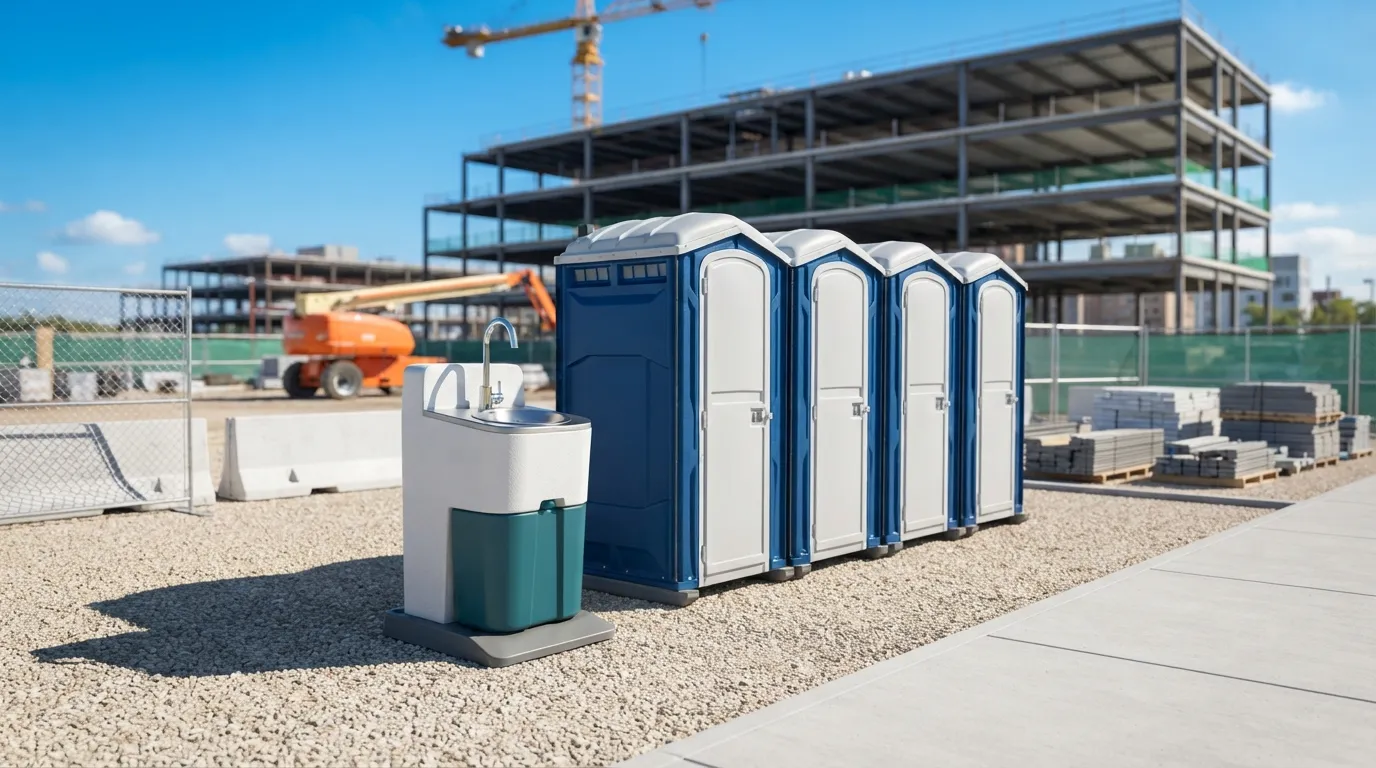
Note that weekend pricing here reflects a different service structure than the day rate, not a discount. If your property is on a construction timeline and you need sanitation squared away for a crew while septic work happens, look at construction site services for the full picture, including temporary power pole and light tower rental options if the job runs into evening hours. Standard portable toilet units also handle worksite sanitation while septic work is underway. A standard porta potty rental holds 60 to 70 gallons and stands about 92 inches tall, which is worth knowing if you're placing one on a tight lot in University Place, 6.8 miles southwest of Tacoma, or anywhere else with limited yard space.
How do I know if my septic tank needs pumping now?
Slow drains, gurgling pipes, sewage odor near the tank, or standing water over the drain field all point to a tank that's overdue. Don't wait for symptoms to worsen. Check our septic tank warning signs page, and call for emergency septic service if you're already seeing backup.
Does household size affect pumping frequency?
Yes. More people means more wastewater and more solids going into the tank, which fills it faster. A six-person household on a smaller tank may need pumping closer to the 3-year mark, while a two-person home on a larger tank can often stretch toward 5 years.
Can a garbage disposal shorten the pumping interval?
Yes. Disposals add solid food waste that doesn't break down as easily as normal wastewater, so tanks feeding a disposal usually need pumping more often than tanks without one. It's a small habit that adds up over years.
What's the difference between septic pumping and septic cleaning?
Pumping removes liquid waste and the floating scum layer. Cleaning also breaks up and clears solid sludge from the tank bottom. Most full-service visits, covered on our septic tank cleaning page, do both in a single appointment.
Is a grease trap on the same pumping schedule as a septic tank?
No. A grease interceptor gets pumped when fats, oils, grease and solids reach 25 percent of the liquid depth, which is a different trigger than the household septic cycle. Commercial kitchens should check grease trap pumping for that schedule instead.
Next step
Get a delivery date
Tell us the address, the dates and the headcount. We size the order and confirm the route.